Cupping: Here's What You Need to Know
If you've been binge-watching the Olympics like we have at our house, you have no doubt seen the strange marks on Michael Phelps' and several other athletes' bodies. But what are they?
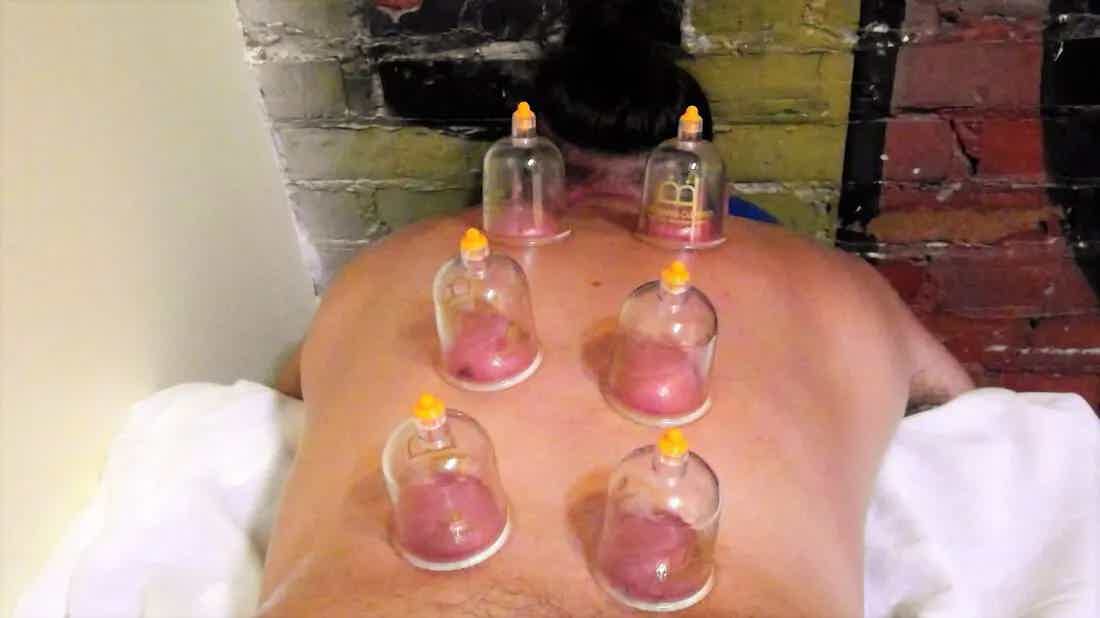
The result of cupping!
Cupping is an ancient healing treatment that involves applying suctioned, sterilized cups over muscular areas in order to increase circulation, relax muscles and speed up recovery time.
The cups themselves can be made of plastic, silicone or glass. Suction can be achieved via a pump, the preferred method in our clinic, or by heating with a flame for glass cups. The cups then are either left in place (retention cupping), slid along large muscle groups (sliding cupping), several applied over an area (multiple cupping), or applied and removed repeatedly (flash cupping) or often a combination. Cupping combines beautifully with massage or acupuncture as well as other therapies.
But what about those hickey-like marks? With increased pressure from the cups, capillaries can weaken and create bruise-like marks. As long as the treatment is used over unbroken, healthy skin this is generally very safe. Typically the marks will fade within a few days, however, they are not always so prominent.
So why are professional athletes and weekend warriors alike loving cupping?
It can be used to treat:
There are several clinical studies looking at the benefits of cupping as well. In particular, one review also found cupping helpful for herpes zoster (shingles), acne, Bell's palsy and neck pain (cervical spondylosis). Another study found that cupping was as effective as rest & pain medication - typical treatment - for low back pain but also had greater improvements in pain, lower recurrence rates and better quality of life. Others found that there is promise for several kinds of pain.
Interested in trying cupping? Book your Complimentary Health Discovery Session to find out if cupping would be a good fit for you!
Resources:
The result of cupping!
Cupping is an ancient healing treatment that involves applying suctioned, sterilized cups over muscular areas in order to increase circulation, relax muscles and speed up recovery time.
The cups themselves can be made of plastic, silicone or glass. Suction can be achieved via a pump, the preferred method in our clinic, or by heating with a flame for glass cups. The cups then are either left in place (retention cupping), slid along large muscle groups (sliding cupping), several applied over an area (multiple cupping), or applied and removed repeatedly (flash cupping) or often a combination. Cupping combines beautifully with massage or acupuncture as well as other therapies.
But what about those hickey-like marks? With increased pressure from the cups, capillaries can weaken and create bruise-like marks. As long as the treatment is used over unbroken, healthy skin this is generally very safe. Typically the marks will fade within a few days, however, they are not always so prominent.
So why are professional athletes and weekend warriors alike loving cupping?
It can be used to treat:
- low back pain
- shoulder pain
- knee pain
- digestive issues
- headaches and neck pain
- dizziness
- cough, frequent illnesses
- common cold
- menstrual cramps *this is one of my favorite treatments!
There are several clinical studies looking at the benefits of cupping as well. In particular, one review also found cupping helpful for herpes zoster (shingles), acne, Bell's palsy and neck pain (cervical spondylosis). Another study found that cupping was as effective as rest & pain medication - typical treatment - for low back pain but also had greater improvements in pain, lower recurrence rates and better quality of life. Others found that there is promise for several kinds of pain.
Interested in trying cupping? Book your Complimentary Health Discovery Session to find out if cupping would be a good fit for you!
Resources:
- Cao H, Li X, Liu J. An Updated Review of the Efficacy of Cupping Therapy. Malaga G, ed. PLoS ONE. 2012;7(2):e31793. doi:10.1371/journal.pone.0031793.https://www.ncbi.nlm.nih.gov/pmc/articles/PMC3289625/
- Huang CY, Choong MY, Li TS. Effectiveness of cupping therapy for low back pain: a systematic review. Acupunct Med 2013;31:336-337 doi:10.1136/acupmed-2013-010385
- Kim J-I, Lee MS, Lee D-H, Boddy K, Ernst E. Cupping for Treating Pain: A Systematic Review. Evidence-based Complementary and Alternative Medicine : eCAM. 2011;2011:467014. doi:10.1093/ecam/nep035.
Disclaimer: This information is educational only, not medical advice. Always consult your healthcare provider before starting any new health regimen. Natural approaches discussed here may complement but should not replace conventional medical care.RetryClaude can make mistakes. Please double-check responses.